Central Texas Cedar Fever & HVAC Air Filtration: MERV 8 vs MERV 11 in Pflugerville Homes
Published by Master Diagnostic Team • Verified October 2026 • Reading Time: 4 Minutes
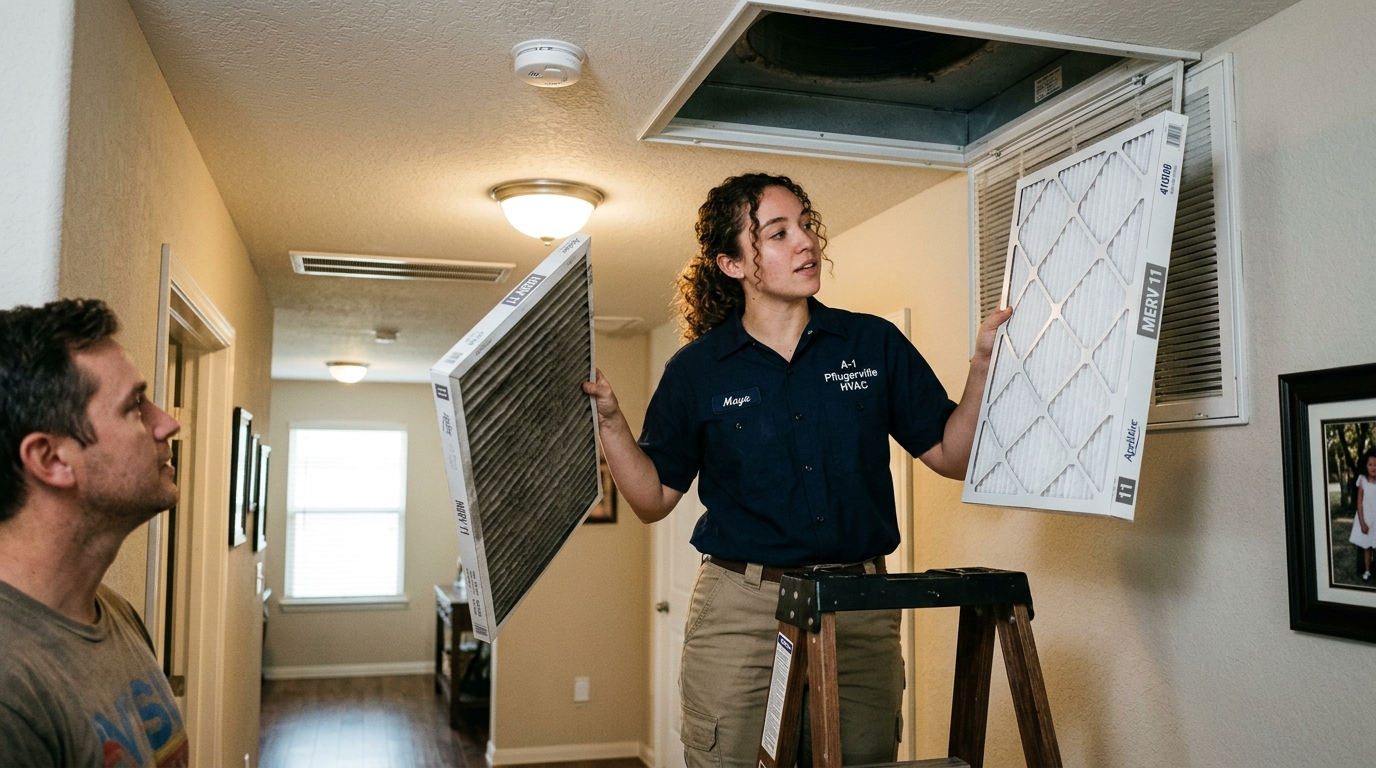
Mountain Cedar Pollen Biology & Indoor Particulate Penetration
Central Texas Cedar Fever is triggered by Mountain Cedar pollen released from December through February across Travis and Williamson counties. Microscopic pollen grains measuring twenty microns infiltrate building envelopes easily, recirculating through return ductwork and causing intense respiratory reactions for residential occupants.
Pflugerville experiences dense pollen clouds carried eastward by winter Arctic cold fronts originating in the Texas Hill Country.
Because homeowners keep windows closed during chilly winter weather, indoor air recirculates continuously through forced-air heating ductwork.
Without high-efficiency air filtration, fine pollen particles bypass loose-fitting return grilles and deposit directly inside air handler blower assemblies.
Selecting the correct filter media rating is essential to capture airborne pollen without starving the residential HVAC system of vital airflow.
MERV 8 vs MERV 11: Static Pressure Drops & Airflow Choking
While MERV 11 pleated filters capture eighty percent of airborne pollen spores, one-inch MERV 11 filters create severe static pressure resistance. In older homes with small return plenums, this restriction chokes airflow, overheating furnace heat exchangers in winter and freezing heat pump coils.
Standard residential HVAC systems are engineered to operate with total external static pressure below 0.50 inches water column.
Installing a dense one-inch MERV 11 pleated filter can increase return static pressure by 0.25 inches water column immediately.
As resistance climbs, electronically commutated blower motors draw elevated wattage, overheat windings, and fail to circulate warm air evenly.
In extreme cases, choked return airflow causes gas furnaces to trip high-limit switches or forces heat pump evaporator coils into freeze-ups.
Optimal Filter Replacement Schedules & Media Filter Upgrades
Pflugerville homeowners battling Cedar Fever should replace one-inch filters monthly during winter or upgrade to a media air cleaner cabinet. Deep four-inch pleated media filters offer four times the surface area, capturing pollen particles with MERV 11 efficiency while maintaining ultra-low airflow resistance.
Thick media filter cabinets installed at the air handler intake protect blower wheels and evaporator coils from biological and particulate contamination.
Regular winter filter swaps prevent dust and cedar pollen accumulation that can ignite on electric heat strips and create burnt odors.
Technicians test external static pressure and calibrate blower speeds during our comprehensive seasonal maintenance tune-up service to verify balanced system airflow.
Homeowners in Windermere and older subdivisions benefit greatly from return duct enlargement to accommodate high-efficiency filtration safely.
Frequently Asked Questions About Cedar Fever HVAC Filtration
Central Texas homeowners frequently seek optimal air filtration strategies to alleviate severe Cedar Fever symptoms without damaging heating equipment. Below are clear practitioner answers addressing whether high-MERV filters damage systems, which rating performs best, and how frequently to replace filters during peak pollen season.
Can a high MERV filter damage my air conditioner or furnace?
Yes. Dense one-inch MERV 11, 12, or 13 filters create high static pressure resistance in systems with small return ducts. This restriction reduces CFM airflow, causing heat pump coils to freeze, gas furnace heat exchangers to overheat, and blower motors to fail.
Which MERV rating is best for Cedar Fever in Pflugerville TX?
A MERV 8 to MERV 11 filter is optimal for standard one-inch filter grilles, provided it is replaced every thirty days during pollen season. For allergy relief without restricting airflow, upgrade to a four-inch MERV 11 media filter cabinet that offers expansive surface area.
How often should Pflugerville homeowners replace filters in winter?
During peak Mountain Cedar season from December through February, one-inch filters should be inspected and replaced every thirty days. Homes with multiple pets or allergy sufferers benefit from bi-weekly visual inspections to ensure accumulated pollen and pet dander do not choke return airflow delivery.
Texas TDLR Class A licensed technicians dispatch 24/7 across 78660 with fully stocked service trucks and upfront diagnostic estimates.
🚨 DISPATCH LOCAL PFLUGERVILLE CREW: (512) 798-4822