Cracked Heat Exchanger Signs in Older Pflugerville Pfarms & Windermere Gas Furnaces
Published by Master Diagnostic Team • Verified October 2026 • Reading Time: 4 Minutes
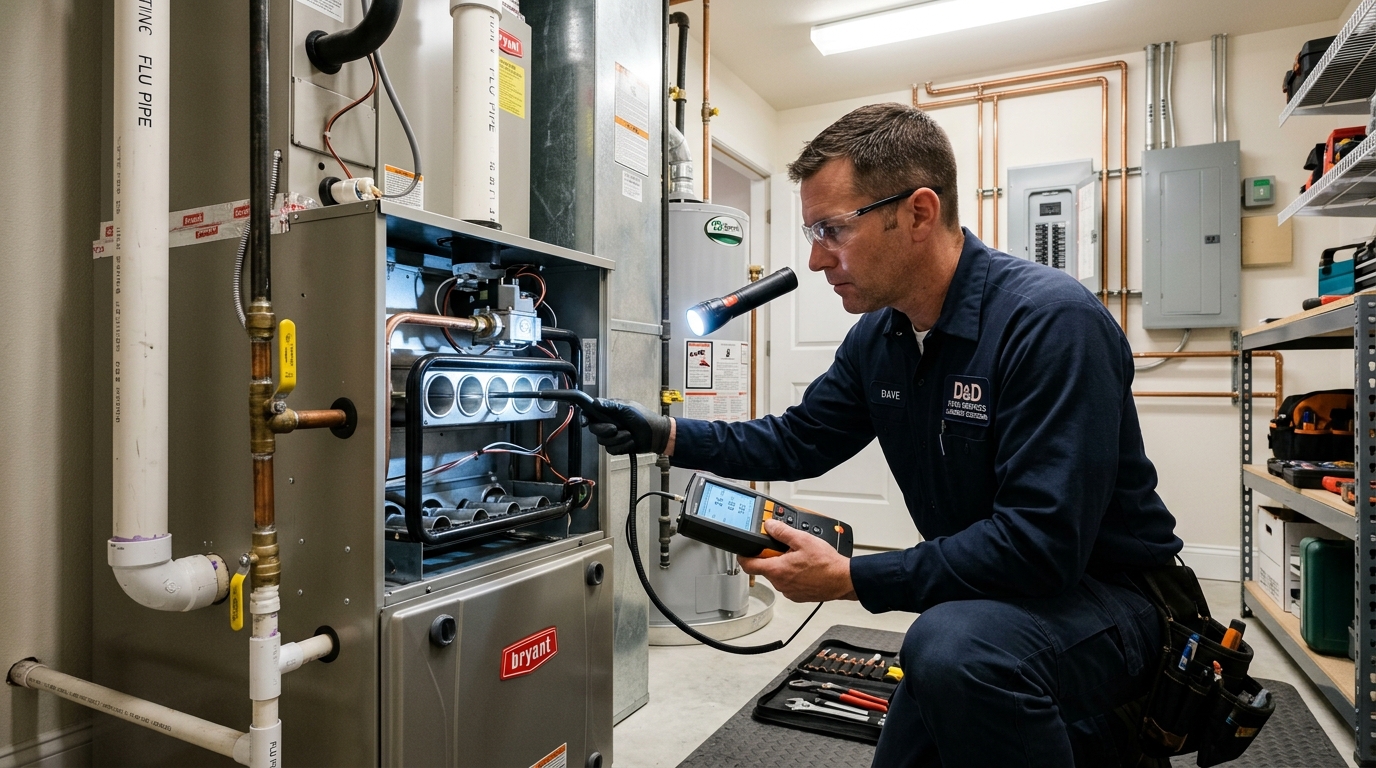
Gas Furnace Combustion Mechanics & Heat Exchanger Fatigue
A residential gas furnace heat exchanger separates toxic combustion byproducts from breathable indoor air. Over fifteen to twenty years of seasonal thermal cycles, metal fatigue and restricted airflow cause steel cells to crack, allowing hazardous carbon monoxide to enter living spaces.
Older properties in Pflugerville Pfarms and Windermere frequently operate original 80% AFUE furnaces installed during past decades.
During winter heating cycles, natural gas burners ignite to heat internal metal clam-shell or tubular chambers rapidly.
As the indoor blower motor pushes cold return air over exterior surfaces, continuous flexing weakens stamped metal seams.
Dirty air filters that restrict return airflow cause furnace chambers to overheat, accelerating microscopic metal cracks into hazardous fissures.
Warning Signs: Flame Rollout, Soot, and Carbon Monoxide Risks
Recognizing heat exchanger failure requires observing burner flame behavior and indoor air quality sensors. Warning signs include burner flames wavering or turning lazy yellow when blowers start, black soot accumulation inside the vestibule, and persistent tripping of thermal rollout safety switches.
A healthy gas burner produces a crisp, steady blue flame with distinct inner cones indicating proper combustion.
When a heat exchanger crack allows circulating blower air into combustion chambers, air pressure disrupts flame patterns visibly.
Carbon monoxide is a colorless, odorless combustion byproduct that causes severe headaches, dizziness, nausea, and fatal asphyxiation.
Homeowners must install UL-listed digital carbon monoxide alarms on every living level near sleeping areas to detect emissions immediately.
Diagnostic Inspection Protocols & Replacement Decisions
Licensed technicians identify hairline fractures using combustion analyzers, optical borescopes, and static pressure tests. Under Texas TDLR safety regulations, an open crack in a furnace heat exchanger cannot legally be patched or welded, requiring immediate equipment shutdown and complete furnace replacement to protect occupants.
Technicians insert high-resolution optical inspection cameras deep into internal curved cells to examine stress points behind baffles.
Combustion analyzers measure flue gas oxygen, ambient carbon monoxide levels, and draft pressure to verify safe venting.
If inspection reveals compromised cell integrity, our certified contractors provide emergency diagnostics and replacements through our gas furnace repair and installation service.
Annual pre-winter safety inspections ensure that igniters, flame sensors, and heat exchangers operate safely before cold fronts arrive.
Frequently Asked Questions About Furnace Heat Exchanger Safety
Pflugerville homeowners relying on natural gas heating systems must remain vigilant regarding combustion safety during winter months. Below are direct answers addressing what causes heat exchangers to crack, why cracked cells cannot be repaired, and how professional diagnostic testing protects household occupants.
What causes a gas furnace heat exchanger to crack in Central Texas?
Restricted airflow from dirty air filters is the primary cause, forcing the furnace to run excessively hot and cyclically overheat. Decades of extreme heating and cooling cycles create severe metal fatigue, eventually splitting stamped steel seams and curved tube bends.
Can a cracked furnace heat exchanger be repaired or welded?
No. Industry manufacturing standards and Texas mechanical codes strictly prohibit welding or repairing cracked heat exchangers. Thermal expansion would quickly re-break any weld, risking deadly carbon monoxide leakage. The entire heat exchanger assembly or furnace unit must be replaced completely.
How does an HVAC technician test for heat exchanger cracks?
Technicians utilize digital combustion analyzers to detect gas leakage, inspect internal chambers with optical fiber-optic cameras, and measure burner flame disruption when the indoor blower initiates. Any air movement disturbing burner flames confirms physical breach of the heat exchanger barrier.
Texas TDLR Class A licensed technicians dispatch 24/7 across 78660 with fully stocked service trucks and upfront diagnostic estimates.
🚨 DISPATCH LOCAL PFLUGERVILLE CREW: (512) 798-4822