An air conditioner makes a buzzing noise due to electrical arcing in the outdoor contactor, a degraded dual run capacitor stalling the compressor motor, seized fan motor bearings, or loose cabinet screws vibrating under harmonic resonance. Addressing the sound promptly prevents complete electrical burnout and expensive motor replacement.
Unusual sounds from an air conditioning system often provide the first warning that an electrical or mechanical component has experienced abnormal wear.
A sharp buzzing or deep humming sound requires systematic troubleshooting. Isolating the physical location and pitch of the noise helps distinguish between simple maintenance tasks and dangerous high-voltage faults.
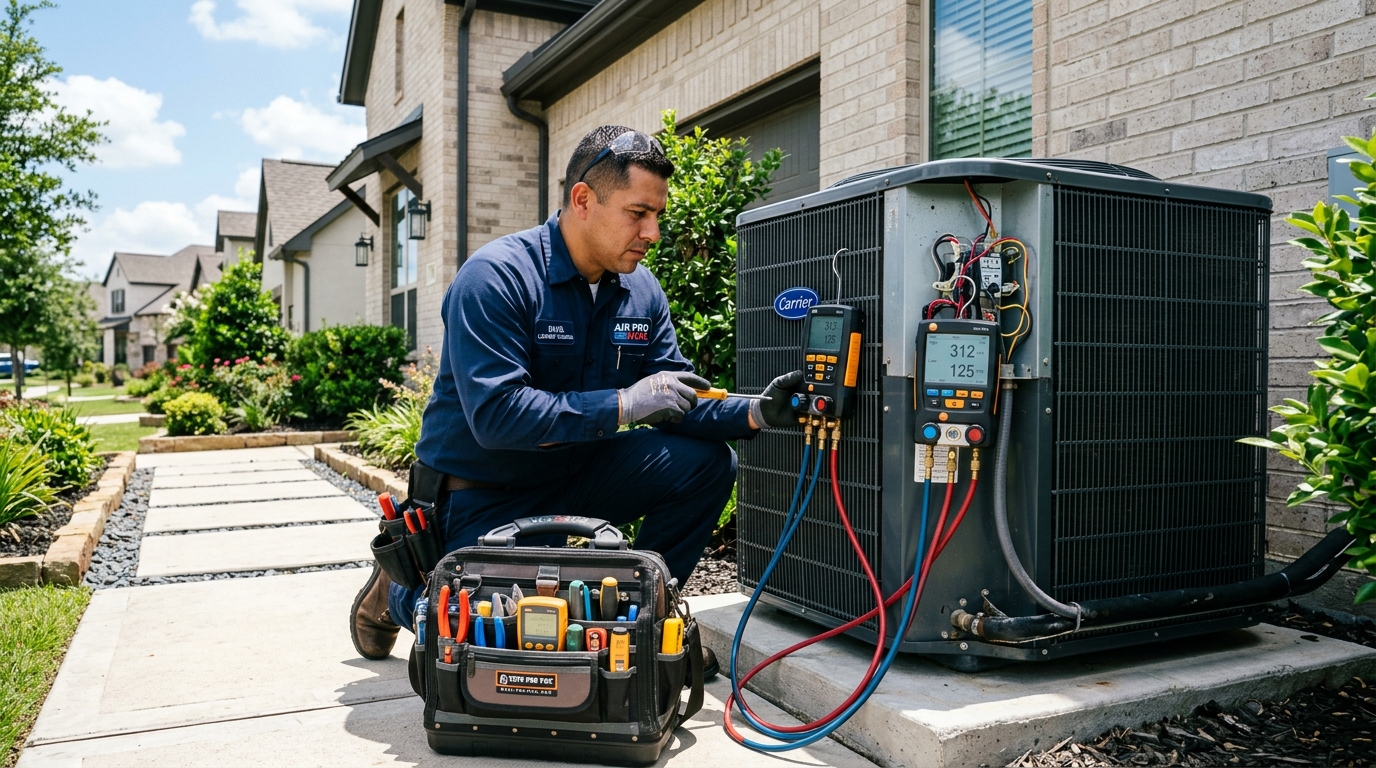
Diagnostic Audio Matrix: Locating the Source of the Buzz
Locating your AC buzzing noise begins by determining whether the acoustic signature originates at the indoor air handler, the outdoor condenser cabinet, or the electrical service disconnect box. An indoor buzz typically points to blower motor resonance, while an outdoor hum indicates contactor chatter or a stalled compressor.
Approach your cooling equipment carefully when performing an acoustic evaluation. Avoid touching electrical panels with bare hands while the system is energized.
Listen closely to the rhythm of the buzz. A steady 60-hertz electrical hum suggests an energized magnetic coil struggling to pull in its contact armature.
In contrast, a buzzing sound that fluctuates with motor speed indicates mechanical friction from spinning fan blades or unbalanced blower squirrel cages.
The 5 Common Causes of AC Buzzing and Humming Noises
The five most frequent causes of air conditioner buzzing noises include chattering contactor relays, failing dual run capacitors, failing condenser fan bearings, loose high-voltage disconnect connections, and unbalanced indoor blower assemblies. Each condition presents distinct electrical symptoms that require targeted diagnostic testing and component replacement.
1. Chattering Contactor Relay: Low Voltage or Pitted Contacts
A chattering contactor produces a rapid, harsh buzzing sound when its 24-volt electromagnetic coil cannot maintain solid contact against spring tension. Low control voltage from a failing transformer, loose thermostat wiring, or fire ant infestation between silver contact pads causes the switch to flutter rapidly.
In Central Texas, invasive fire ants are attracted to electrical fields inside condenser control panels. They crawl between contactor points, bridging the gap and burning up, which prevents the contactor from closing completely.
2. Failing Dual Run Capacitor: Stalled Compressor Motor Hum
A weak or failed dual run capacitor cannot supply the initial phase-shift torque required to spin the heavy compressor rotor. When energized with 240 volts without startup torque, the motor draws Locked Rotor Amps, emitting a deep, distressed electrical hum until the thermal overload trips.
Capacitors deteriorate rapidly during prolonged summer heat waves. Testing terminal microfarad ratings against nameplate ratings confirms whether the capacitor must be replaced.
3. Condenser Fan Motor Bearing Seizure or Blade Imbalance
Condenser fan motors emit a high-pitched buzz when internal sleeve bearings lose lubrication or collect airborne dust. As bearings bind, the motor draws excessive current, vibrating through the top grill while spinning sluggishly or failing to rotate entirely despite receiving line-voltage power.
Gently spinning the fan blade while power is disconnected reveals bearing health. If the blade resists movement or screeches, bearing failure has occurred.
4. Arcing Disconnect Switch or Loose Electrical Wiring Lugs
A sharp sizzling or buzzing noise originating near the outdoor wall-mounted disconnect box indicates dangerous electrical arcing. Thermal expansion and contraction loosen terminal lugs over time, causing 240-volt electrical current to jump micro-gaps, scorching wire insulation and risking sudden structural fires.
Turn off the main electrical panel breaker immediately if you notice electrical buzzing or burnt odors near the exterior disconnect switch.
5. Indoor Blower Motor Vibration and Duct Resonance
Indoor air handlers produce a low-frequency buzzing hum when blower motor mounting brackets loosen or the squirrel cage wheel collects heavy dust buildup. The resulting rotational imbalance creates harmonic vibration that resonates through metal sheet plenum ducts, amplifying sound throughout living areas.
Cleaning the blower wheel and securing loose cabinet panels eliminates harmonic resonance and restores quiet indoor airflow.
Hearing an Alarming Buzz from Your AC Unit?
Do not let a buzzing contactor or failing capacitor burn out your expensive compressor. Our licensed technicians provide same-day diagnostic service across Pflugerville.
Call for Rapid Service: (888) 217-8281
Can You Run an AC While It Is Buzzing? Safety Risks
Running an air conditioner while it is buzzing is unsafe because the noise signals electrical overloading, component binding, or arcing voltage. Continuing to run the system risks burning out compressor motor windings, melting electrical wiring harness insulation, or triggering high-heat electrical cabinet fires across residential properties.
When you hear a persistent buzz, turn the thermostat to the off position immediately. This cuts the 24-volt cooling call and prevents electrical current from continuing to stress bound motors.
A $180 capacitor or contactor repair can rapidly escalate into a $2,500 compressor replacement if an overloaded motor is allowed to overheat repeatedly.
Homeowners experiencing sudden cooling interruptions can rely on our dedicated emergency AC repair technicians for rapid, component-level electrical restoration.
Frequently Asked Questions About AC Buzzing Noises
Why is my outside AC unit making a loud buzzing noise?
An outside AC unit makes a loud buzzing noise primarily due to a failing dual run capacitor, a chattering 24-volt contactor relay, or a seized condenser fan motor. If the capacitor cannot deliver sufficient voltage, the compressor motor stalls and hums continuously without spinning.
A certified technician uses digital multimeters and amp clamps to isolate whether the sound is generated by low control voltage or high motor winding resistance.
Is it safe to run my AC while it is buzzing?
No, running an air conditioner while it is buzzing is unsafe because electrical buzzing often indicates arcing terminal wires, failing contactor points, or a locked motor drawing excess current. Continued operation can cause permanent compressor motor burnout, melt wiring insulation, or trigger electrical fires.
Always shut down power at the indoor thermostat and outdoor pull-out disconnect box until a licensed technician inspects the electrical assembly.
How do I fix a buzzing AC contactor?
Fixing a buzzing AC contactor requires shutting off high-voltage power at the disconnect, inspecting the magnetic coil for 24-volt drop, and cleaning insect debris from between contact points. If the electrical contact faces are pitted, charred, or burned, the contactor must be replaced.
Technicians often install sealed contactors to prevent insects from crawling between points and causing recurring contact chatter.
How much does it cost to fix an AC making a buzzing sound?
Repairing an AC buzzing noise typically costs between $150 and $450 for common electrical fixes like replacing a dual run capacitor, cleaning contactor points, or securing loose cabinet panels. If the buzzing originates from a seized fan motor or damaged compressor, costs range from $450 to $1,800.
Scheduling a seasonal preventative HVAC tune-up ensures electrical connections are torqued properly before summer heat stresses components.
Fast Electrical Diagnosis in Pflugerville
Stop the buzzing before it causes total system shutdown. Our TDLR-licensed professionals carry fully stocked service trucks for immediate on-site repair.
Book Your Diagnostic: (888) 217-8281